Solar Shades Automation
Home / Solar Shades Automation
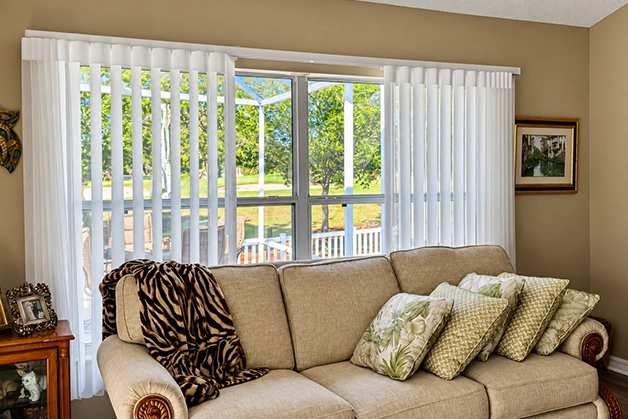
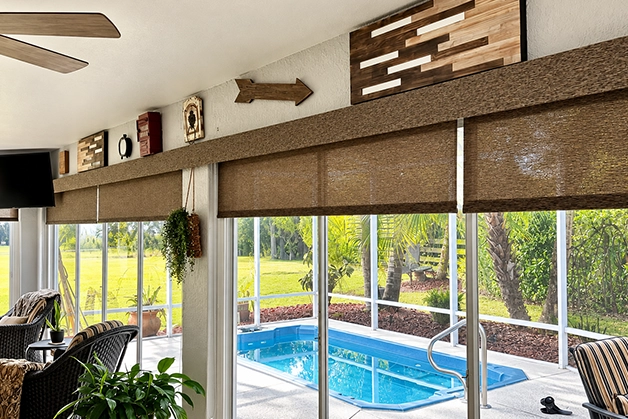
Solar Shade Automation for The Villages Homes
Solar automation powers motorized shades and blinds with the same Florida sunshine that pours through your windows. Village View Shutters & Blinds installs solar-powered window treatments for homes in The Villages, FL, with more than 22 years of experience in shades, blinds, and shutters. Carl Seigel explains how each system charges and runs, so you know exactly what you are buying before you decide. Every solar shade is sized to your window and mounted for a clean, finished look.
A typical solar system includes:
- Slim solar panel: A small strip mounted behind the shade, facing the glass to catch daylight.
- Rechargeable battery: Stores the charge so your shade keeps working in the evening and on cloudy days.
- Quiet motor: Raises and lowers the shade with the energy the panel collects.
- Simple controls: Use a remote, phone app, or voice assistant, just like any other motorized shade.
Solar automation works with roller shades, cellular shades, and exterior lanai screens. Each system is tested on site. For a limited time, save 25% on qualifying solar-powered shades and blinds. Call Carl at (352) 661-4697 today to book your in-home consultation and find out which of your windows are a good fit for solar.
Is Solar Right for Your Windows?
Florida gets plenty of sun, which makes solar automation a practical choice for many homes in The Villages. Carl starts by checking which of your windows get the most daylight and where a solar panel can sit without being blocked by frames, plants, or awnings. He then explains, in plain words, which rooms are a strong fit for solar and which might work better with a standard motorized shade. Solar is popular for tall great-room windows, sunrooms, and lanais, where windows sit high or wide. It also works well for homeowners who want to mix solar shades with the blinds or plantation shutters they already have. Exterior solar screens on a lanai can block heat, bugs, and glare while keeping your view of the yard. Once you choose, Village View measures each window, orders your shades and panels, and installs them on a scheduled day. Before leaving, every panel is checked for proper sun exposure and every motor is tested from your remote or phone app. If you add a room, enclose a porch, or want more windows automated later, Carl can expand your system. All visits are by appointment only, and Carl brings samples right to your home. Call (352) 661-4697.
Why Choose Us
Skip the Electrician Bill
Running new wires to each window can add hundreds of dollars and patched drywall to your project. Solar shades power themselves from daylight, so you avoid the extra electrician visit, the wall repairs, and the cost that comes with both.
No Ladder Battery Swaps
Battery-powered shades on tall windows mean climbing a ladder every time the power runs low. Solar panels recharge the battery on their own daily, so you rarely need to reach up and touch the shade again once it is installed.
No Dangling Charging Cords
Some motorized shades need a cable plugged in to recharge, leaving ugly, tangled cords hanging down your window. Solar shades charge from sunlight alone, so your windows stay clean and uncluttered without any wires running across to the nearest outlet.
Frequently Asked Questions
The panel is a slim strip mounted behind the shade, facing the glass. From the street it may show as a thin dark line at the top of the window, but most people do not notice it, especially behind tinted or screened windows.
Tint and low-E glass reduce the light reaching the panel, but many solar shades still charge well behind them. The best way to know is a test on your actual window, which Carl can do during your in-home consultation before you order.
Sometimes. It depends on the brand and motor in your current shades, since solar panels must match the motor's charging system. Bring the brand name or a photo of the motor label to your consultation, and Carl will tell you whether a solar upgrade is possible.